Living with French Bulldog BOAS: Non-Surgical Care & Crisis Protocol (2026)
Brachycephalic Obstructive Airway Syndrome (BOAS) is an anatomical reality in French Bulldogs resulting from severe artificial cranioskeletal compression. While soft palate resection and rhinoplasty represent the definitive intervention for advanced obstruction—as broken down in our French Bulldog BOAS surgery cost analysis—mild functional deficits can be stabilized conservatively.
Non-surgical management is not passive observation. It is a rigid biomechanical containment protocol engineered to prevent negative-pressure airway collapse and fatal thermal decompensation.
1. Cambridge RFG Staging: Objective Surgical Qualification
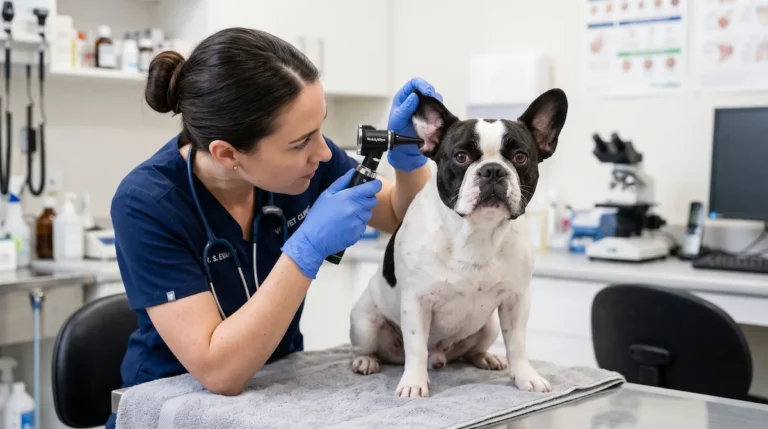
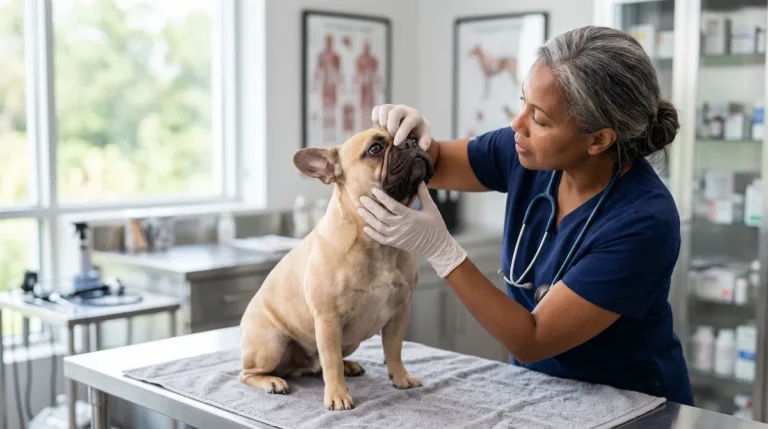
Functional airway compromise is evaluated using the University of Cambridge Respiratory Function Grading (RFG) scheme. Clinical qualification for conservative management is determined by respiratory noise, inspiratory effort, and dyspnea before and after a standardized 3-minute exercise test:
| RFG Grade | Clinical Presentation | Airway Lumen Status | Non-Surgical Safety | Clinical Action |
|---|---|---|---|---|
| Grade 0 | Zero audible stertor or stridor; open external nares; normal post-exercise recovery | Anatomically open | 100% Viable | Standard preventive monitoring |
| Grade 1 | Mild stertor audible only via stethoscope; no dyspnea; exercise tolerance preserved | Mildly crowded | Fully Viable | Enforce conservative home protocol |
| Grade 2 | Clinically significant BOAS; constant audible stertor, mouth breathing on mild exertion | Severely crowded | High Failure Risk | Surgical referral strongly indicated |
| Grade 3 | Severe BOAS; continuous high-pitched stridor, intercostal breathing, visible cyanosis | Near-complete occlusion | Contraindicated | Immediate emergency surgical intervention |
Grade 0 and Grade 1 dogs are the only medically viable candidates for conservative management. Attempting to manage a Grade 2 or Grade 3 dog without corrective surgery guarantees progressive structural degeneration, accelerating secondary laryngeal collapse.
2. The Conservative Airway Protocol: Four Clinical Baselines
Conservative management operates on a single principle: reducing mucosal friction and eliminating inspiratory negative pressure across the brachycephalic respiratory tract, which is already burdened by the breed’s broader congenital brachycephalic health complications.
1. Thermal & Vapor Pressure Ceilings
Canine thermoregulation relies on the evaporation of fluid from the tongue and upper respiratory mucosa. The compressed nasal architecture of a French Bulldog reduces heat dissipation efficiency by up to 80%.
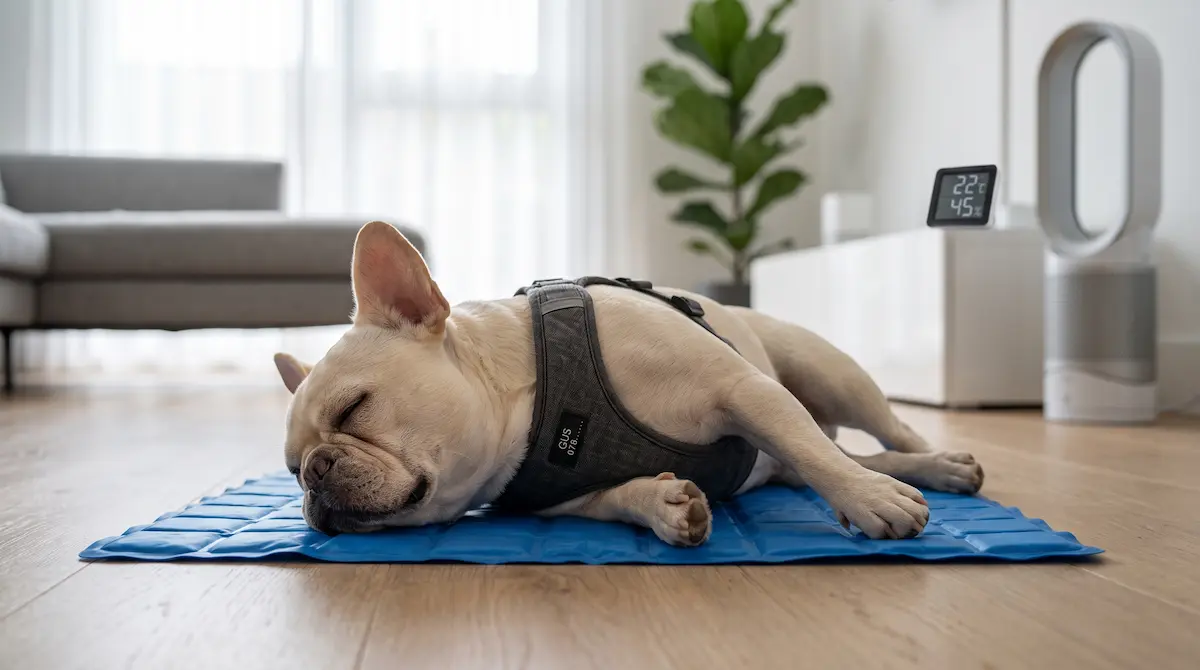
- Indoor HVAC Baselines: Maintain ambient indoor temperatures at 68°F to 72°F (20°C–22°C) with relative humidity below 50%.
- The 75°F Thermal Threshold: Outdoor walks are strictly prohibited once ambient temperatures exceed 75°F (24°C), or at lower temperatures when humidity surpasses 65%.
- Elimination Timing: Limit summer bathroom trips to under 3 minutes, restricted strictly to pre-dawn hours (before 7:00 AM) and late evening (after 8:30 PM).
2. Elimination of Cervical Tracheal Tension
Neck collars transfer leash tension directly onto the thyroid cartilages and hypoplastic tracheal rings, triggering instantaneous mucosal edema.
- Mandatory Wide Harnesses: Walk dogs exclusively on low-cut, Y-shaped sternal harnesses. The cranial strap must cross the prosternum bone well below the cervical trachea, distributing tensile pull across the rib cage.
3. Anatomical Lumen Optimization (Weight Management)
Adipose tissue accumulates internally across the soft palate, lateral pharyngeal walls, and tongue base, narrowing an already crowded airway lumen.
- Target Body Composition: Enforce a lean Body Condition Score of 4/9.
- Clinical Lumen Expansion: A 10% reduction in total body weight expands the effective pharyngeal airway area by up to 25%, directly lowering daily airway resistance without surgical cutting.
4. Suppression of the Gastroesophageal Reflux Loop
Inhaling against occluded nares creates massive negative intrathoracic pressure. This vacuum force pulls gastric acids upward through the cardiac sphincter into the esophagus, causing chronic chemical esophagitis and secondary laryngeal edema.
- Gravity-Assisted Ingestion: Elevate feeding and water bowls 6 to 8 inches off the ground to prevent head-down esophageal reflux during swallowing.
- Gastric Protection: Dogs that regularly produce white regurgitation foam require veterinary management with proton pump inhibitors (Omeprazole) and prokinetics (Metoclopramide) to break the acid-induced airway inflammation cycle.
3. Acute Respiratory Distress: Clinical Crisis Algorithm
Thermal exposure, excitement, or stress accelerates respiration. Turbulent airflow creates severe mucosal friction, which swells the soft palate, increases airway resistance, and triggers catastrophic hyperthermia.
The physiological decompensation follows a rapid sequence: Rapid Panting leads to Mucosal Swelling, which causes Airway Narrowing, forcing Extreme Inspiratory Effort, culminating in Hypoxia and Heatstroke.
If a French Bulldog enters acute respiratory decompensation, execute this clinical stabilization sequence immediately:
Step 1: Rectal Temperature Triage
Measure core temperature with a lubricated digital rectal thermometer:
- 101.0°F – 102.5°F: Normal baseline.
- 103.0°F – 104.5°F: Moderate hyperthermia. Initiate active home evaporative cooling immediately.
- > 105.0°F: Critical emergency. High risk of cellular lysis, cerebral edema, and disseminated intravascular coagulation (DIC).
Step 2: Active Evaporative Heat Extraction
- Tepid Water Saturation: Saturate the dog’s paws, groin, and ventral abdomen with cool or lukewarm tap water. Never use ice water or ice baths. Extreme cold induces peripheral vasoconstriction, shunting superheated blood inward to core organs and triggering shivering that elevates metabolic heat generation.
- Convective Air Movement: Direct a high-speed fan across the saturated skin to drive evaporative cooling.
- Paw Pad Alcohol Evaporation: Apply 70% isopropyl alcohol to the bare footpads using cotton pads to accelerate conductive heat transfer.
Step 3: Mechanical Airway Management
- Clear ropy saliva and obstruction from the pharynx using a dry finger sweep.
- Stop all active cooling measures the moment rectal temperature drops to 103.0°F (39.4°C) to prevent rebound hypothermic shock. Transport the dog inside a fully air-conditioned vehicle immediately to an emergency specialty hospital.
4. The Biological Trade-Off: Progressive Laryngeal Collapse
The irreversible flaw of non-surgical management is anatomical: lifestyle changes cannot remove physical soft tissue volume.
Persistently forcing air past stenotic nares and an elongated soft palate subjects the upper airway cartilages to chronic negative pressure fatigue:
- Stage 1 (Everted Saccules): Chronic negative pressure pulls the mucosal lining of the lateral laryngeal ventricles outward, blocking up to 30% of the glottic opening.
- Stage 2 (Cuneiform Collapse): Mechanical fatigue compromises the support structures of the arytenoid cartilages, causing the cuneiform processes to bend inward during inhalation.
- Stage 3 (Total Laryngeal Collapse): Structural corniculate cartilages lose complete rigidity, sealing the airway shut. Stage 3 carries an extremely poor clinical prognosis, often requiring emergency permanent tracheostomy.
5. Non-Negotiable Triggers for Surgical Intervention
Conservative management has failed when structural decompensation begins. Immediate surgical evaluation is mandatory if your dog displays any of the following clinical signs:
- Obstructive Sleep Apnea: Waking up coughing or gasping, or requiring a raised head position with a toy wedged between open jaws to maintain an open airway during sleep.
- Exertional Cyanosis: Mucous membranes or tongue shifting from healthy pink to slate grey, purple, or pale blue during light activity.
- Frequent Aerophagia & Vomiting: Regurgitating white froth or food boluses more than twice weekly.
- Syncopal Episodes: Acute loss of consciousness or hind-limb collapse secondary to transient cerebral hypoxia.
The Pre-Existing Chart Trap: Underwriting Realities
Pet insurance underwriters treat brachycephalic airway disorders with strict exclusion protocols. The moment a primary care veterinarian enters “stertor,” “noisy breathing,” or “pinched nostrils” into medical records during an annual wellness exam, the entire upper respiratory system is permanently classified as a pre-existing condition.
Once charted, underwriters reject 100% of future claims for soft palate resection, nares revision, and intensive care heatstroke hospitalizations. Safeguarding your finances against these exclusions requires securing coverage during early puppyhood; compare fine-print underwriting terms and bilateral condition clauses across the best pet insurance plans for French Bulldogs before clinical symptoms appear in official health records.