Chronic Ear Infections in French Bulldogs: Otitis Externa Care & Insurance Traps (2026)
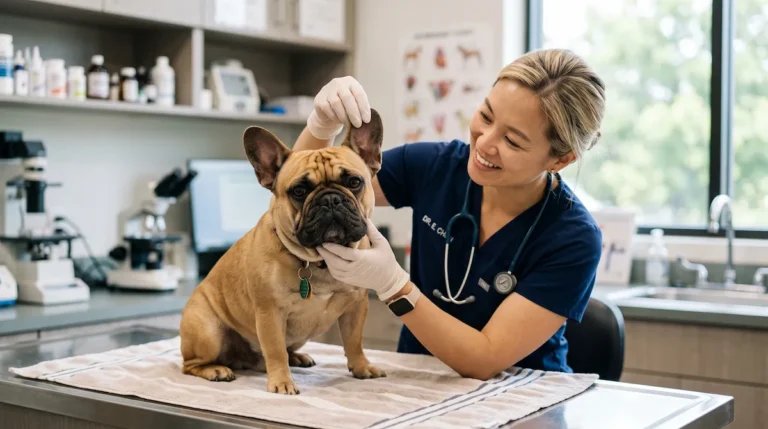
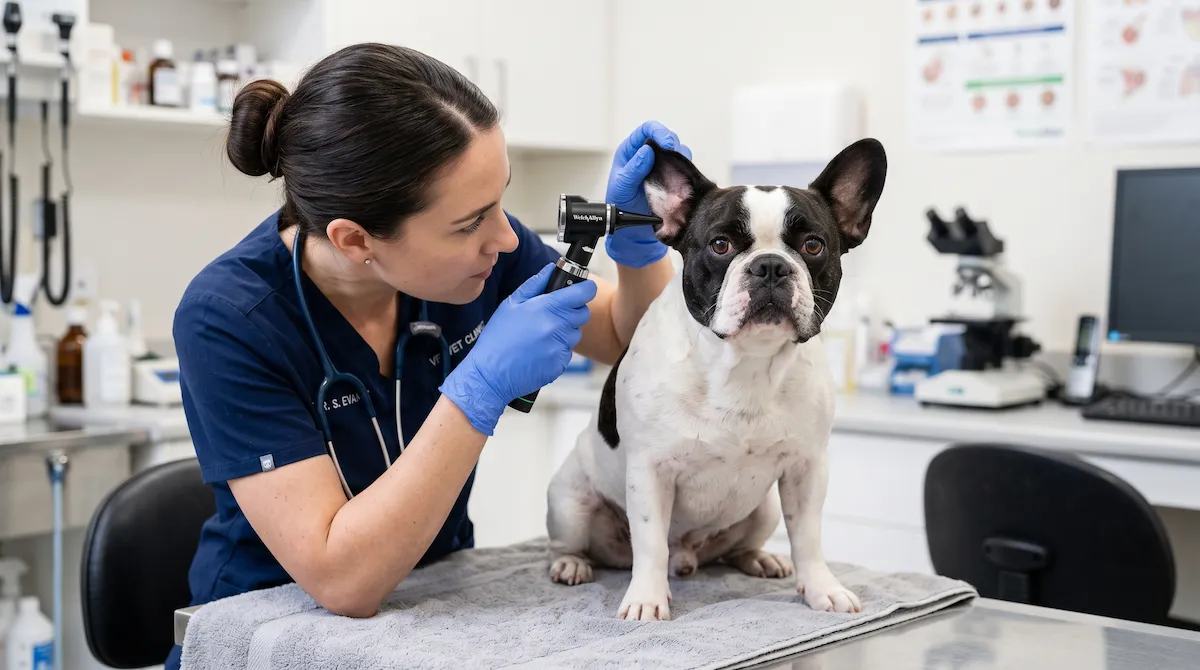
French Bulldogs possess narrow, tortuous ear canals combined with a genetic predisposition to allergic barrier dysfunction. When environmental allergens or dietary proteins compromise skin immunity, the ear canal is frequently the first anatomical site to react. Clinically known as otitis externa, Frenchie ear infections are rarely isolated events—they are chronic inflammatory flare-ups that can permanently alter the canal’s architecture.
Without systematic hygiene and medical management, superficial microflora overgrowth progresses into chronic tissue hyperplasia, severe pain, and permanent hearing damage. Maintaining healthy ears requires understanding the allergy-skin axis; for an overview of systemic triggers, consult our French Bulldog allergies guide.
1. Why Frenchies Suffer Recurrent Ear Infections
Unlike breeds with upright ears that enjoy wide, dry auditory canals, the French Bulldog’s internal anatomy presents distinct clinical challenges:
- Stenotic Canal Conformation: Frenchies often inherit narrow, collapsed ear canals. This natural constriction limits airflow, creating a dark, moist incubator where yeast and bacteria flourish.
- Underlying Atopic Dermatitis: The ear canal is lined with skin. Over 80% of dogs with food or environmental allergies exhibit recurrent ear inflammation. Allergic flare-ups cause the epidermal lining to swell, secrete excess cerumen (wax), and trap moisture.
- Secondary Yeast & Bacterial Proliferation: An disrupted ear microbiome allows opportunistic organisms—principally Malassezia pachydermatis (yeast) and Pseudomonas or Staphylococcus bacteria—to rapidly proliferate.
2. Infection Stages & Clinical Indicators
Early detection prevents deep middle-ear damage (otitis media). Monitor your dog’s behavior and ear discharge against this diagnostic progression:
| Infection Stage | Clinical Signs & Discharge | Immediate Action Required |
|---|---|---|
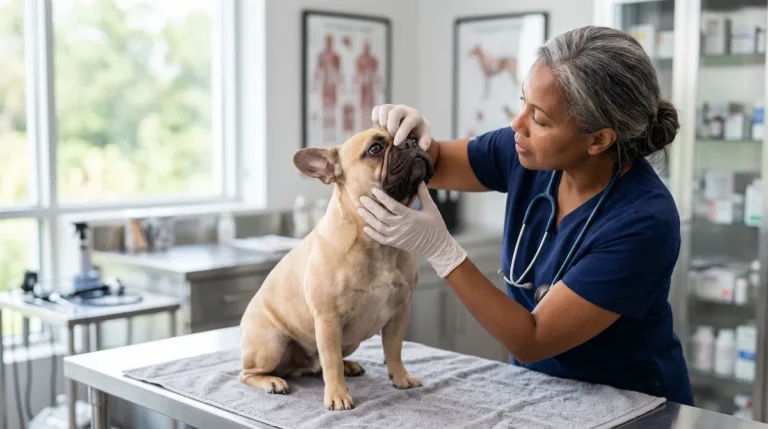
| Stage 1: Ceruminous Otitis | Yellow/light-brown waxy buildup, mild head shaking, faint yeasty odor, pink canal lining. | Flush with an antimicrobial, drying ear cleanser 2–3 times weekly. |
| Stage 2: Yeast Overgrowth | Dark brown or black “coffee-ground” debris, intense scratching, strong pungent corn-chip odor, red swollen canal. | Veterinary cytology swab; prescription antifungal/corticosteroid topical drops. |
| Stage 3: Chronic Suppurative | Yellow/green purulent pus, blood traces, extreme pain upon touching, head tilt, cobblestone-like canal thickening. | Immediate vet exam, deep sedation flush, systemic antibiotics, and imaging. |
If chronic infections coincide with paw licking or deep facial skin fold redness, refer to our comprehensive French Bulldog health guide to assess systemic management strategies.
3. Safe Ear Cleaning Protocol: The “Fill & Flush” Technique
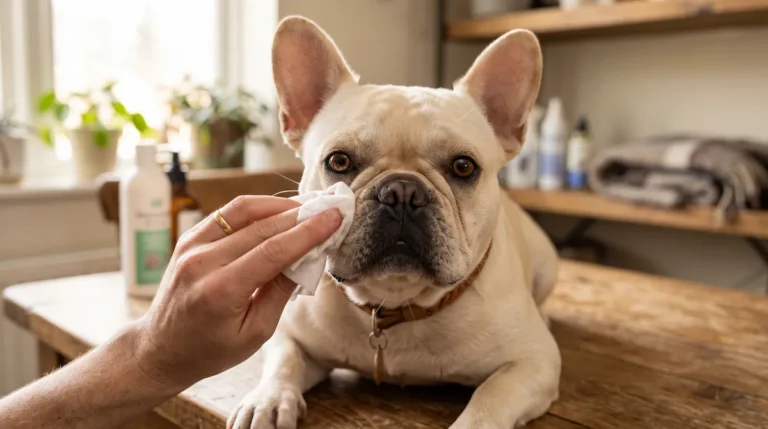
Improper ear cleaning causes mechanical trauma, pushing infectious debris deeper against the tympanic membrane (eardrum). Never use human cotton swabs (Q-tips), hydrogen peroxide, or witch hazel inside the canal.
- Fill the Canal Generously: Gently hold the ear flap upright. Pour a veterinary-grade, drying ear cleanser (formulated with Tris-EDTA, Phytosphingosine, or Chlorhexidine) directly into the canal until liquid is visible at the opening.
- Massage the Base (30 Seconds): Grasp the cartilage at the base of the ear beneath the opening. Massage gently in a circular motion until you hear a squishing sound. This action breaks up deep, stubborn wax plugs.
- Allow the Head Shake: Step back and let your dog shake its head vigorously. Centrifugal force naturally propels loosened secretions up from the vertical canal.
- Wipe the Outer Flap Only: Use a clean cotton ball or dry gauze pad to wipe away expelled wax from the ear canal opening and outer ear flap. Never probe into the horizontal canal.
4. Medical & Surgical Costs Breakdown
Managing chronic otitis externa places a persistent drain on long-term finances. Recurrent flare-ups require continuous diagnostic cytology, specialty flushes, and anti-inflammatory medications.
Routine Medical Management (Annual Costs)
- Veterinary diagnostic cytology swabs (2–4 visits/year): $150 – $350
- Prescription medicated topicals & anti-itch meds: $300 – $600
- Veterinary deep sedation flushes: $400 – $800
- Annual Medical Total: $850 – $1,750 / year
The Surgical Last Resort: TECA-BO
When years of unresolved infections lead to calcified, permanently scarred ear canals (end-stage ear disease), medications can no longer penetrate. Dogs experience chronic, intractable pain. The only curative option is a Total Ear Canal Ablation with Lateral Bulla Osteotomy (TECA-BO)—a major orthopedic procedure removing the entire ear canal:
- TECA-BO Procedure (Unilateral): $3,500 – $6,000
- TECA-BO Procedure (Bilateral, both ears): $6,500 – $10,000+
5. The Insurance Pre-Existing Condition Trap
Ear infections represent the single most common insurance claim rejection trap for French Bulldog owners.
Underwriters scrutinize baseline veterinary medical notes. If a vet noted “minor wax accumulation,” “slight ear redness,” or “head shaking” during your initial puppy exam or during an enrollment waiting period, the insurance company will classify all future ear conditions as pre-existing.
This exclusion does not just disqualify routine $80 ear drops; it permanently excludes major $8,000 TECA surgeries down the road.
Certain providers offer distinct advantages, such as policies that distinguish between “curable” conditions (reinstating ear coverage after a documented symptom-free period) versus lifetime exclusions. To protect your finances before minor inflammation is permanently recorded in medical charts, explore our independent review of the best pet insurance for French Bulldogs.