French Bulldog Allergies: Symptoms, Treatment Costs & Care Guide (2026)
French Bulldogs are genetically predisposed to sensitive skin and compromised immune barriers. Chronic itching, paw chewing, red skin folds, and recurrent ear infections are rarely isolated issues—they are hallmark signs of underlying allergic disease.
Without early clinical intervention, mild surface irritations rapidly escalate into deep secondary bacterial (Staphylococcus) or yeast (Malassezia) infections. This guide outlines the clinical differences between food and environmental allergies, establishes a sterile wrinkle-cleaning regimen, and details the lifetime financial costs of chronic medical management. For an overview of other congenital breed risks, explore our French Bulldog health guide.
1. Clinical Signs: How Allergy Symptoms Manifest
Allergic dermatitis in Frenchies rarely presents as sneezing or watery eyes. Instead, immune hypersensitivity targets the skin barrier, specifically in friction zones and areas with high moisture.
- Obsessive Paw Chewing & Licking: Saliva stains white paws reddish-brown due to porphyrin pigments. Dogs chew relentlessly to soothe deep intradermal itching.
- Intertrigo (Skin Fold Dermatitis): Moist, reddened, or foul-smelling debris accumulating within nasal folds and tail pockets.
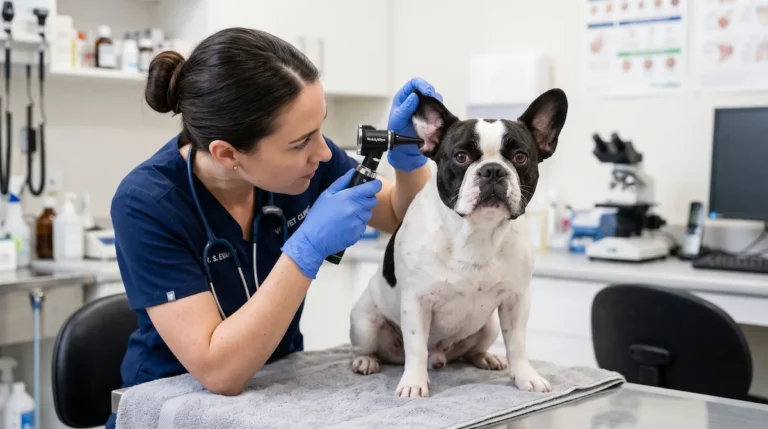
- Chronic Otitis Externa: Recurrent ear inflammation marked by black or yellowish waxy discharge, head shaking, and an unpleasant yeasty odor. Learn proper cleaning protocols in our guide to chronic ear infections in French Bulldogs.
- Ventral Erythema (Hot Spots): Red, inflamed skin across the belly, armpits, and groin that feels hot to the touch and develops crusty papules.
2. Food Allergies vs. Atopic Dermatitis (Environmental)
Accurate treatment requires isolating the root cause. Treating an environmental allergy with dietary changes yields zero results, while ignoring food triggers leads to perpetual gut and skin inflammation.
| Allergy Characteristic | Food Intolerance / Allergy (CAFR) | Environmental Atopy (Atopic Dermatitis) |
|---|---|---|
| Primary Triggers | Common animal proteins (Chicken, Beef, Dairy, Lamb) | Dust mites, pollens, mold spores, grasses |
| Seasonality | Year-round; consistent flare-ups regardless of weather | Often seasonal (spring/fall peaks), though indoor dust atopy persists year-round |
| Gastrointestinal Signs | Soft stools, chronic gas, vomiting, frequent bowel movements (>3 times/day) | Extremely rare; purely dermatological symptoms |
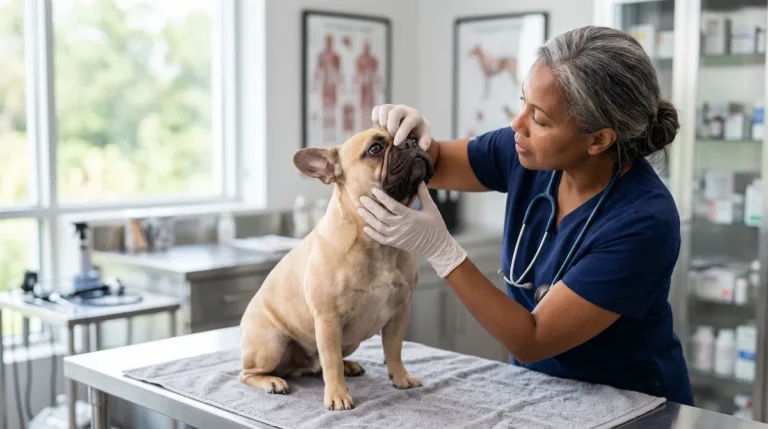
| Diagnostic Gold Standard | Strict 8-to-12-week Hydrolyzed or Novel Protein Elimination Diet Trial | Intradermal skin testing or serum IgE testing by a veterinary dermatologist |
The Elimination Diet Protocol
To identify food triggers, feed an exclusive prescription hydrolyzed diet (such as Royal Canin HP or Hill’s z/d) for a minimum of 8 consecutive weeks. Zero treats, flavored medications, rawhides, or table scraps are permitted. If symptoms resolve and then return upon reintroducing specific single proteins, the dietary trigger is confirmed.
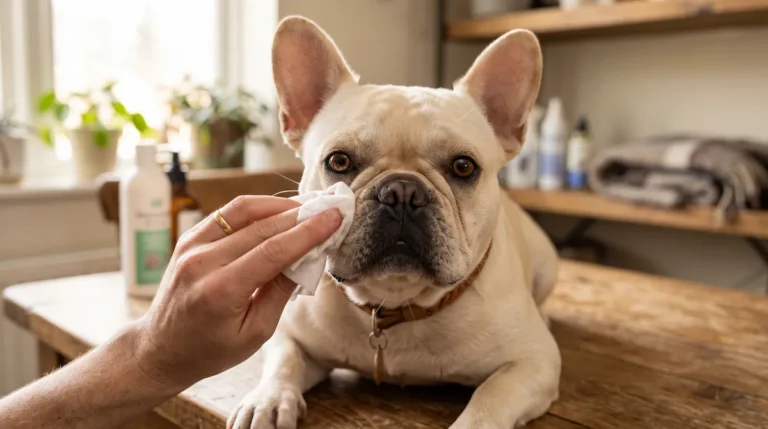
3. Daily Hygiene: Facial Folds and Tail Pocket Protocol
Because flat-faced anatomy creates dark, warm, and humid skin crevices, opportunistic pathogens multiply rapidly without daily maintenance.Follow our dedicated wrinkle and tail pocket care guide for step-by-step antiseptic cleaning and infection prevention.
- Cleanse: Part the facial folds and wipe gently from the inner eye outward using an alcohol-free, 2% Chlorhexidine and 1% Ketoconazole antiseptic wipe.
- Dry Completely: Moisture is the primary catalyst for yeast growth. Pat the crevice thoroughly with a clean, dry microfiber cloth until zero dampness remains.
- Barrier Protection: Apply a thin layer of natural soothing balm (or zinc-free wrinkle barrier paste) to repel moisture from tears and drinking water.
- Tail Pocket Care: Check the recessed tail pocket daily. Clear away trapped dead hair and secretions using an antiseptic wipe, followed immediately by drying.
4. Lifetime Treatment & Medication Cost Breakdown
Managing allergic dermatitis is rarely a one-time cure; it requires lifetime medical maintenance. Veterinary care costs escalate rapidly when dogs require long-term immunomodulatory pharmaceuticals.
| Treatment / Medication | Clinical Indication | Estimated Annual Cost |
|---|---|---|
| Apoquel (Oclacitinib) | Daily oral tablet targeting the JAK pathway to inhibit chronic itch signaling. | $1,100 – $1,800 / year |
| Cytopoint Injections | Monoclonal antibody injection administered every 4 to 8 weeks to neutralize IL-31 cytokines. | $900 – $1,600 / year |
| Prescription Hydrolyzed Diet | Medically formulated hypoallergenic nutrition designed to bypass immune detection. | $1,200 – $1,600 / year |
| Medicated Topicals & Cytology | Antiseptic shampoos, ear flushes, and routine vet skin-scraping cytology tests. | $400 – $800 / year |
| Total Annual Maintenance | Combined ongoing management for moderate-to-severe cases | $3,600 – $5,800 / year |
5. The Insurance Pre-Existing Condition Trap
Allergy-related veterinary care carries a major financial trap: insurers exclude all chronic skin treatments if symptoms appear before enrollment.
If a vet records “mild redness in ears” or “irritated paws” during a baseline puppy exam, insurance underwriters automatically classify all future skin conditions, ear infections, and secondary dermatitis as pre-existing conditions. Because managing atopic disease over a Frenchie’s 10-to-12-year lifespan frequently exceeds $25,000, securing comprehensive coverage early is critical.
To protect against rising chronic care costs and high-risk spinal emergencies, review our independent rankings of the best pet insurance for French Bulldogs. Choosing an underwriter that provides explicit coverage for hereditary conditions before symptoms are charted ensures your dog remains protected for life.